
Less Chasing, Less Stress, and a Better Start to Your Cat’s Appointment
If you’ve ever spent 20 minutes searching under beds, moving furniture, or trying to convince your cat to come out of hiding before a veterinary appointment, you’re not alone. Cats are creatures of habit, and changes to their routine—especially the appearance of a carrier—can make them nervous.
The good news? With a little preparation and the right approach, getting your cat ready for a veterinary visit can be a much smoother experience.
1. Make the Carrier Part of Everyday Life
One of the best ways to reduce carrier-related stress is to stop treating the carrier like something that only appears on vet day.
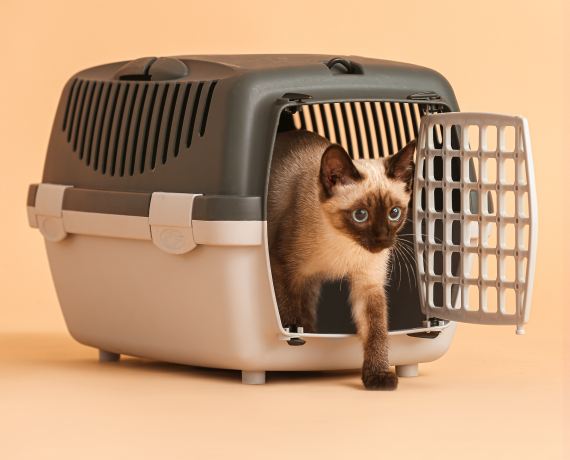
Leave the carrier out in a quiet, familiar area of your home with the door open. Add a soft blanket, favorite toy, or a few treats to encourage your cat to explore it on their own. Over time, your cat may begin to associate the carrier with comfort rather than an unexpected trip.
For the best results, start this process well before your cat’s next appointment.
2. Choose the Right Carrier
A sturdy carrier with both front and top openings is ideal for many cats. Carriers with removable tops can be especially helpful because they allow you to gently place your cat inside without forcing them through a narrow doorway.
Make sure the carrier is large enough for your cat to stand, turn around, and lie down comfortably. Place a familiar towel or blanket inside to provide comfort and help prevent slipping.
3. Prepare Your Home Before It’s Time to Leave
Cats are experts at finding hiding places, especially when they sense something unusual is happening.
Before getting ready for your appointment, calmly guide your cat into a smaller, quiet room with minimal hiding spots. Close doors to bedrooms and other areas where your cat might disappear under furniture.
This helps prevent a stressful chase through the house and makes it easier to approach your cat gently.
4. Encourage, Don’t Chase
Whenever possible, let your cat enter the carrier voluntarily. Place treats or a favorite toy inside and give them time to investigate.
If your cat won’t enter on their own, gently and securely support their body as you place them into a top-loading carrier. For some cats, wrapping them loosely in a familiar towel can help with safe, gentle handling.
Avoid chasing, scruffing, or forcing your cat into the carrier. These experiences can increase fear and make future veterinary visits more difficult.
5. Keep the Trip Comfortable
Once your cat is safely inside, cover the carrier with a lightweight towel or blanket, making sure there’s plenty of ventilation. This can help reduce visual stimulation during the trip.
Carry the carrier with both hands, supporting it from underneath to minimize swinging. In the car, secure the carrier so it won’t slide or tip during travel.
Keep the environment quiet and comfortable, and avoid opening the carrier until you’re safely inside an enclosed exam room or instructed by our veterinary team.
6. Ask Us for Help if Your Cat Is Especially Anxious
Some cats experience significant fear or anxiety surrounding veterinary visits, even with careful preparation.
If your cat becomes extremely distressed, hides for hours, or is difficult to handle safely, let our team know before your appointment. We can discuss additional strategies and determine whether veterinarian-prescribed medication before the visit may help.
Never give your cat calming medications or supplements without consulting your veterinarian first.
A Better Vet Visit Starts at Home
Getting your cat into their carrier doesn’t have to be a stressful experience. By introducing the carrier early, creating a calm environment, and giving your cat time to adjust, you can help make veterinary visits easier for everyone.
Have questions about preparing your cat for an upcoming appointment? Contact our team! We’re happy to help you and your feline friend get ready for a more comfortable visit.